Choosing Grow Tent Size: Get the Space Right
A tent that looks generous on the shop floor can feel very different once the light, fan, filter, ducting, reservoir and plants are inside. Choosing grow tent size is really about protecting plant health while leaving yourself enough room to work. Get that balance right and managing light, airflow, feeding and training becomes far easier from the first grow through to harvest.
Start With the Room, Not the Plants
Before comparing tent dimensions, measure the area where it will live. Check the floor space, ceiling height, nearby power points and the route you will use to bring equipment in. A tent needs a little breathing room around it too. If every side is hard against a wall, fitting ducting, checking electrical connections or opening a vent can become frustrating very quickly.
Allow enough clearance for the door to open fully and for you to stand or kneel comfortably while tending plants. A tent may technically fit in a spare room, garage or enclosed patio, but a cramped setup often leads to missed checks and difficult maintenance. You need practical access to inspect leaves, adjust light height, empty runoff and clean up spills.
Ceiling height deserves special attention. The listed tent height is not all usable plant height. Your grow light and hanging hardware take up space at the top, while the distance between the light and canopy protects plants from excess heat or intensity. Pots, trays and mature plant height take up the rest. A taller tent gives more flexibility for larger plants and stronger lighting, while a shorter tent suits compact crops, propagation or spaces with low ceilings.
Choosing Grow Tent Size for Your Plant Plan
The best tent size depends on how many plants you intend to grow, how long they will be in the space, and how you plan to shape them. Plant count alone can be misleading. Several small, regularly maintained plants may fit comfortably in the same footprint as one or two plants that are allowed to spread wide.
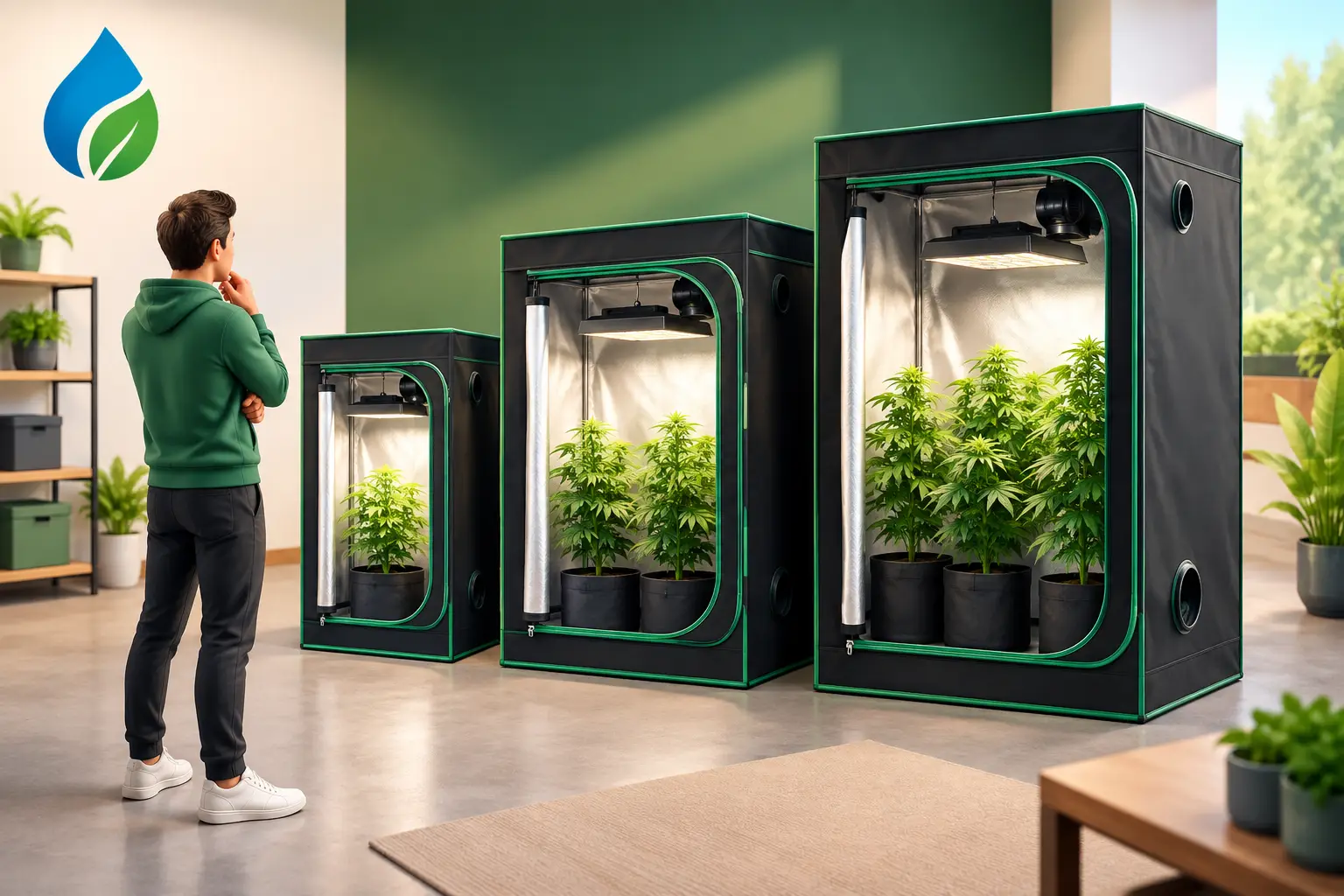
For a compact indoor garden, a 60 cm x 60 cm tent is useful for seedlings, cuttings, herbs, leafy greens or a single small plant. It is easy to place in tight areas and uses less power, but there is limited room for a large reservoir, filter or extensive training.
A 90 cm x 90 cm tent offers a noticeable step up in canopy area without becoming difficult to manage. It can suit growers who want room for several modest plants and a more capable LED setup. For many home growers, 1.2 m x 1.2 m is a practical all-round footprint. It provides enough canopy area to make efficient use of a quality light while still allowing access from the front.
Larger tents, such as 1.5 m x 1.5 m or 2.4 m x 1.2 m, are better suited to growers with a dedicated space, higher production goals and the ability to manage more equipment. More floor area can mean more yield potential, but only when lighting, ventilation, irrigation and environmental control scale with it. A bigger tent is not automatically a better tent if its centre receives weak light or stale air.
Think about the canopy you want to create. Healthy yields come from an even canopy with leaves receiving useful light, not from squeezing the maximum number of pots into a small square. Leave space between plants for air movement and inspections. Crowded foliage stays damp for longer and makes pest or fungal problems harder to spot early.
Match the Tent to Your Light
Your light should cover the canopy evenly, and the tent should contain that useful footprint. This is one of the most important decisions when selecting a tent. An undersized light in an oversized tent leaves weak edges, while an oversized light in a small tent can create heat, bleaching or uneven growth if it cannot be hung at an appropriate height.
LED grow lights are usually selected by their recommended flowering or high-light coverage area rather than wattage alone. Check the manufacturer’s coverage guidance at the hanging height you expect to use. A light designed for a 90 cm x 90 cm canopy is naturally paired with a tent around that size. If you use a slightly smaller tent, make sure the light can be dimmed or raised enough to keep intensity appropriate.
Reflective tent walls help return otherwise wasted light to the plant, but they do not fix poor coverage. Aim for a light that reaches the edges of the canopy without relying on plants in the corners receiving less energy. A PAR metre is the most accurate way to assess light levels, although careful observation of plant response is valuable as well.
Remember that plants have different requirements at different stages. Propagation and early vegetative growth need less intensity than a mature, fruiting or flowering canopy. A dimmable fixture gives useful flexibility, especially in smaller tents where light-to-canopy distance is limited.
Leave Room for Airflow and Climate Control
A grow tent is a controlled environment, not just a cupboard with a light in it. Plants use carbon dioxide during photosynthesis, release moisture through transpiration and add to the heat load beneath a light. Your extraction fan, carbon filter, ducting and circulation fans must be sized for the tent volume and the heat produced by the equipment.
A carbon filter and inline fan often sit at the top of the tent, exactly where height is most valuable. In a low tent, this can reduce the space available between the light and canopy. Some growers place equipment outside the tent where practical, but that requires a tidy ducting path and enough room in the surrounding area. Plan this before committing to the footprint.
Inside the tent, an oscillating fan should move leaves gently without constantly blasting one plant. The aim is to avoid stagnant, humid pockets around dense foliage. As tent size increases, one small clip fan may no longer be enough. You may need circulation from more than one direction, particularly with a full canopy.
In Australian conditions, heat can build quickly in a garage, shed or upstairs room through summer. A larger tent holds more air, but it also usually carries more lighting and more plants. Consider the temperature of the room outside the tent, not just the temperature you hope to achieve inside it. If the surrounding space gets very hot or cold, extraction alone may not solve the issue.
Plan Where Water, Nutrients and Runoff Will Go
A tent’s floor area needs to accommodate more than pots. Soil grows may only need room for saucers and a watering can, while hydroponic systems can require a reservoir, pumps, pipework and return lines. If you are feeding multiple plants by hand, leave a clear path to reach the back pots without leaning over the canopy.
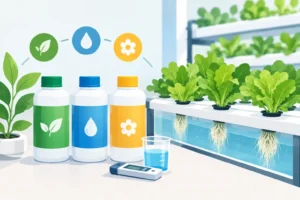
For hydroponic gardening, easy access to the reservoir makes regular pH and EC measurement much more likely. That matters because nutrient strength and water quality can change as plants feed. A reservoir squeezed behind a packed tent might save a few centimetres of floor space, but it makes routine adjustments a chore.
Also consider drainage. Runoff should not pool beneath pots or disappear where you cannot inspect it. A waterproof tray, raised pot stands and a sensible spill plan make day-to-day gardening cleaner and help prevent root-zone issues. The right size tent gives you room to do these jobs properly rather than improvising after the plants are established.
One Large Tent or Separate Spaces?
If you want to raise plants from propagation through to harvest, separate spaces can be more useful than one large tent. A small propagation tent or shelf allows seedlings and cuttings to grow under gentler light while the main tent runs at a different schedule and intensity. This approach supports a steady workflow, although it adds equipment costs and requires more room.
A single larger tent is simpler for new growers and can be very productive when all plants are at a similar stage. It is usually the better choice when budget, power access and available space are limited. The trade-off is less flexibility if you need different temperatures, light schedules or nutrient programs at the same time.
Avoid Sizing for Today Only
Buying the smallest tent that fits your immediate plan can work, but it may limit you once your confidence grows. On the other hand, buying a huge tent before you understand ventilation, feeding and plant training can make early mistakes more expensive. Choose a size you can light evenly, ventilate reliably and access comfortably.
If you are unsure between two sizes, map both out on the floor with masking tape, then include the footprint of the reservoir, fan, filter and the space needed to open the door. That simple exercise makes the decision much clearer. Hunter Hydro can help match the tent, light, ventilation and nutrient approach to your available space, because your success is our success.
The right tent should make regular plant care feel straightforward. Give your plants enough room to capture light, move air and develop a healthy root zone, and give yourself enough room to notice what they need before a small problem becomes a big one.