A spare wall, garage corner or small grow room can produce far more than a row of pots when plants are arranged vertically. That is the appeal of vertical farming: it puts the same floor area to work across multiple growing levels. Done well, it can deliver fresh herbs, leafy greens, propagation plants and compact fruiting crops with impressive consistency. Done poorly, it can create shaded plants, warm stagnant air and a lot of avoidable maintenance.
The difference comes down to designing the system around what plants need, rather than simply stacking shelves. Light, airflow, irrigation, nutrient strength and access all become more important when plants are growing above and below one another. For home growers and serious hobby cultivators alike, getting those foundations right makes bigger yields much simpler.
What vertical farming actually means
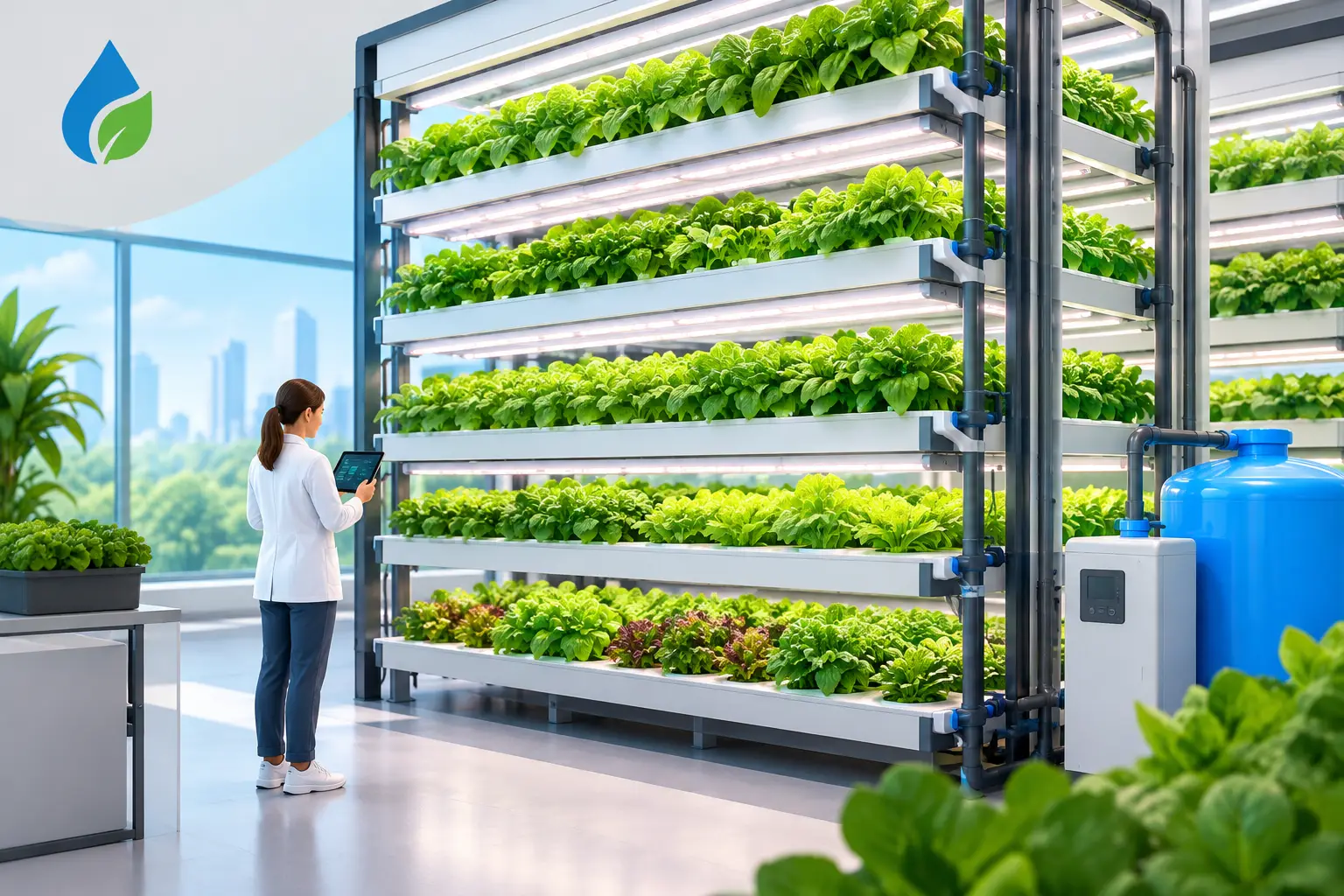
Vertical farming is the practice of growing plants in stacked layers instead of spreading them across a single horizontal area. It can be as modest as a two-tier rack under LED grow lights, or as advanced as a climate-controlled room with automated irrigation and multiple levels of hydroponic channels.
Most small-scale setups use hydroponics, coco or another soilless medium because these methods make water and nutrient delivery easier to manage. Recirculating systems can be efficient, but they require careful monitoring. Run-to-waste systems are often simpler for newer growers because each plant receives a fresh feed, although they use more water and nutrient solution.
Vertical growing makes the most sense for plants that remain relatively compact and grow quickly. Lettuce, basil, coriander, rocket, Asian greens, microgreens, strawberries and young plants are common choices. Larger, heavily branching plants can still be grown vertically, but they need more headroom, stronger support and greater attention to canopy management.
Start with the crop, not the rack
It is easy to see an empty rack and imagine filling every shelf. A better starting point is to choose the crop and work backwards. Ask how tall the plant will become, how much room it needs between plants, how long it will remain in the system and whether it needs intensive light to perform well.
Leafy greens are forgiving because they have a low canopy, a short growth cycle and moderate lighting needs. They suit closely spaced shelves and can provide a regular harvest. Fruiting plants need more space, more light and more airflow. If the crop becomes crowded, humidity rises around the leaves and lower growth is shaded out. More plant sites do not always mean more usable yield.
Leave enough vertical clearance for the pot or channel, the expected plant height, the light fitting and a safe gap between the fixture and the canopy. You also need room to inspect plants, adjust lights and remove a tray without damaging the level above it. A rack that looks efficient but is difficult to work in will quickly become frustrating.
Lighting is the engine of vertical farming
Every level needs adequate, even light. This is the most common limitation in a vertical setup because upper shelves can block natural light and each layer effectively becomes its own indoor garden.
LED grow lights are usually the practical choice. They are efficient, produce less radiant heat than older lamp styles and can be positioned closer to plants when the manufacturer’s guidance allows. The goal is even coverage across the full tray or shelf, not a bright patch in the centre with weak growth at the edges.
Light intensity should match the crop and its stage of growth. Propagation and leafy greens generally need less intensity than flowering or fruiting plants. If seedlings stretch, leaves reach upward excessively or growth is loose and pale, the light may be too weak or too far away. Bleached leaf tips, curled upper leaves or excessive leaf temperature can indicate that the fixture is too close or too intense.
A timer gives plants a consistent day-night rhythm and makes the system easier to run. Before adding more fixtures, check the electrical load, use quality equipment rated for the environment and keep power boards and connections well away from water. Water and electricity should never share a casual setup.
Airflow and temperature matter on every shelf
Warm air rises, which means the top tier of a vertical garden often runs hotter than the bottom. Meanwhile, densely planted lower levels can trap humidity and stale air. Without circulation, plants may transpire poorly, stems may weaken and fungal disease becomes far more likely.
Use fans to move air gently through and across the canopy, rather than blasting one section of plants constantly. An extraction fan and ducting can remove hot, humid air from an enclosed tent or room, while a suitable intake replaces it with fresher air. The right fan size depends on the total space, heat from lighting and how densely the area is planted.
Check temperatures and humidity at more than one level. A single thermometer at eye height will not reveal what is happening under the top lights or in the shaded lower shelf. If there is a consistent difference between levels, adjust fan placement, light height, extraction or plant spacing before it turns into uneven growth.
Feed water with accuracy, not guesswork
Hydroponic vertical farming is efficient because roots can receive water and nutrients directly. It also gives growers less room for error. A nutrient solution that is slightly too strong, too weak or outside the correct pH range can affect a whole level of plants quickly.
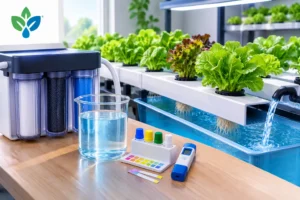
Use a reliable pH meter and EC meter to check what is going into the system. pH affects nutrient availability, while EC indicates the overall concentration of dissolved salts. The ideal readings depend on the crop, growth stage, water source and nutrient line, so follow the feeding guidance for your chosen product and watch the plants as well as the numbers.
For many hydroponic crops, pH is commonly managed within a mildly acidic range. Do not chase minor changes constantly, but correct readings that move outside the suitable range for your plants. Calibrate meters regularly and keep probes clean. A faulty reading can lead to a perfectly mixed reservoir being adjusted into the wrong range.
Reservoir temperature deserves attention too. Water that becomes too warm holds less dissolved oxygen and can encourage root-zone problems. Keep reservoirs covered to block light, reduce algae and limit evaporation. If you recirculate nutrient solution, inspect pumps, lines and drippers routinely. One blocked emitter on a stacked system can leave a plant dry while everything else appears normal.
Build for maintenance and clean growing
The best vertical system is not the one with the most shelves. It is the one you can check, clean and adjust without a major operation. Make sure each tier can be reached comfortably, with enough room to remove plants and catch runoff. Strong shelving is essential, as water, reservoirs, trays and mature plants become heavy surprisingly fast.
Keep the growing area tidy. Remove fallen leaves, clean spills promptly and avoid allowing water to sit in trays where pests and algae can establish. Inspect leaf undersides and new growth regularly for early signs of mites, aphids, thrips or fungal issues. In a close, stacked garden, a small problem can spread quickly.
It also helps to stagger plantings rather than filling every shelf at once. A steady rotation gives you more regular harvests and reduces the chance that every plant reaches the same demanding stage at the same time. It also lets you learn from each crop without risking the entire setup.
When vertical farming is worth it
Vertical farming is especially useful when floor space is limited, natural light is unreliable or you want consistent access to fresh produce and young plants. It offers excellent control, but that control comes with responsibilities: equipment needs cleaning, water needs testing and the environment needs regular observation.
For growers starting out, a simple two-level system with quality lighting, gentle airflow and a manageable number of plants is often the smartest move. Once you understand how your chosen crop responds, expanding is much easier than trying to fix an overcrowded system from day one. Hunter Hydro can help match lighting, irrigation, nutrient and ventilation equipment to your space, crop and production goals.
Give each shelf enough light, fresh air and access for your hands, and vertical farming becomes more than a space-saving idea. It becomes a practical way to grow healthier plants, harvest more often and make every square metre count.