Hydroponic EC Meters for Better Plant Feeding
A nutrient tank can look perfectly clear while your plants are quietly being underfed or pushed too hard. That is where hydroponic EC meters earn their place in every serious grow room, greenhouse and backyard system. They give you a quick reading of nutrient strength, so feeding decisions are based on what is actually in the root zone rather than guesswork.
For growers chasing healthier growth and more consistent yields, EC is one of the most useful numbers to understand. It is not a substitute for watching your plants, managing pH or maintaining good airflow, but it gives context to all three. A reliable meter helps you spot when a reservoir needs topping up, changing or adjusting before plant stress costs you growth.
What an EC meter actually measures
EC stands for electrical conductivity. In plain English, it measures how well your nutrient solution conducts electricity. Dissolved mineral salts, including the nutrients plants use, make water more conductive. The higher the EC reading, the stronger the solution generally is.
EC does not identify every individual nutrient in the tank. A meter cannot tell you whether calcium is low, whether nitrogen is excessive, or whether a nutrient product has gone off. What it does tell you is the total concentration of dissolved salts. Used alongside a suitable nutrient schedule, it is an excellent way to keep feeding strength within a sensible range.
This matters because plants do not need the same strength of feed at every stage. Freshly rooted cuttings and seedlings need a gentle solution. Established vegetative plants can generally handle more. Heavy-feeding plants in flower or fruiting may require a stronger mix, although that depends on the cultivar, light level, temperature, root health and nutrient range being used.
A higher EC is not automatically better. If the solution is too strong, water becomes harder for roots to take up. You may see burnt leaf tips, dark foliage, curled leaves, slow growth or a plant that droops even though the media is wet. Conversely, a very low EC can leave a fast-growing plant short of the nutrition it needs for healthy foliage, flowers or fruit.
Why hydroponic EC meters make feeding simpler
Nutrient labels and feed charts are useful starting points, not unbreakable rules. Your water source, reservoir volume, additives and growing environment all affect the final mix. Two growers can follow the same recipe and arrive at different EC readings.
Hydroponic EC meters let you confirm the result. Add your base nutrients and any compatible additives, mix thoroughly, then test the solution. If the reading is below your target, make small adjustments rather than adding a large dose all at once. If it is too high, dilute with water that is suitable for your system, mix again and retest.
The same approach helps with reservoir maintenance. As plants drink water, the EC can rise if they take up more water than nutrients. If they consume nutrients faster than water, EC may fall. A changing number is not automatically a problem, but it is valuable feedback. Combined with your water level, pH and plant appearance, it can show whether your current feed is well matched to demand.
In recirculating systems, regular testing is particularly useful because the solution changes over time. In coco or other substrates, checking runoff EC can also reveal salt build-up around the roots. A high runoff reading compared with the feed going in may indicate that watering practices need attention or that the media needs a carefully managed flush.
Choosing the right EC meter for your grow
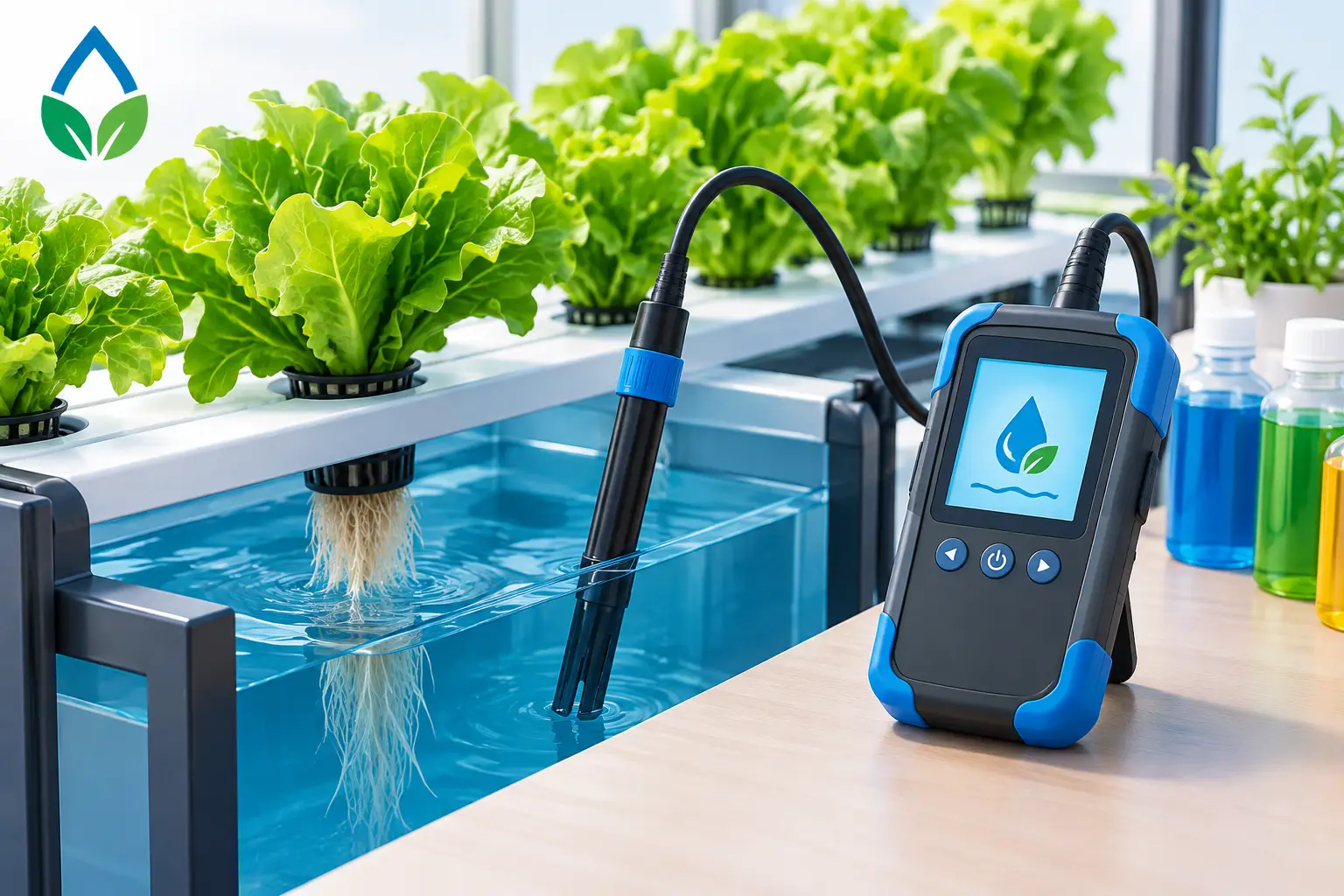
The best meter is not always the model with the longest feature list. Choose one you will use regularly, care for properly and understand. For a small hand-watered setup, a dependable handheld pen with a clear display is often all you need. For larger reservoirs or frequent testing, features such as automatic temperature compensation, replaceable probes and easier calibration can save time and improve confidence.
Temperature compensation is especially handy. Conductivity changes with temperature, so a solution tested on a hot summer afternoon can read differently from the same solution tested when it is cool. A meter with automatic temperature compensation adjusts the result to a standard reference temperature, making readings more comparable.
Also check the scale used by the meter. Some models display EC in mS/cm, while others show parts per million, commonly called ppm or TDS. EC is the more direct measurement. Ppm figures are calculated from EC using a conversion factor, and different manufacturers may use different scales. That means 700 ppm on one meter may not match 700 ppm on another. When following a nutrient guide, confirm whether it refers to EC, a 500 scale or a 700 scale.
For most home growers, a quality waterproof EC pen is a practical choice. If you are running multiple tanks, a commercial greenhouse, or want to monitor a fixed reservoir, a continuous monitor may be worth considering. The right option depends on your system, how often you mix nutrient solution and how precise your production goals are.
How to use an EC meter properly
Good readings start before the probe enters the reservoir. Mix nutrients completely, especially after adding concentrated products. Add nutrients to water one at a time rather than combining concentrates together, as this can cause unwanted reactions. Let the solution settle briefly, then stir gently before testing.
Rinse the probe with clean water, shake off excess droplets and place it in the solution. Wait for the reading to stabilise. Take the measurement away from air stones, pumps and fresh nutrient additions where possible, as heavy turbulence can make testing less consistent.
Test at the same point in your routine each time. For example, check a recirculating reservoir each morning before topping it up. Consistent timing makes trends easier to read. Keep a simple grow record with the date, EC, pH, water temperature, water level and any changes you make. It only takes a minute and gives you something far more useful than memory when a plant’s growth changes.
Do not forget your starting water. Tap water can already contain dissolved minerals, and its EC may vary by area or season. Testing water before adding nutrients gives you a baseline. If the starting EC is high, you may need to adapt your feeding program or consider an appropriate filtration option for sensitive crops.
Calibration and cleaning are part of accuracy
A premium meter that is not calibrated can be less useful than a basic meter that is looked after. Calibration checks whether the probe is reporting accurately against a known standard solution. Follow the manufacturer’s instructions, use the correct EC calibration solution, and calibrate at the recommended interval. For frequent growers, checking it regularly is sensible, especially after storage or when readings seem unusual.
After every use, rinse the probe with clean water. Avoid wiping the sensing area aggressively, which can damage delicate parts. Never store an EC meter with dried nutrient residue on the probe. Deposits can cause slow response times and inaccurate readings.
Storage instructions vary between models, so follow the guidance for your specific unit. Some probes need suitable storage solution, while others have different requirements. Calibration fluids and storage products are small ongoing costs, but they protect the accuracy of the tool guiding your nutrient decisions.
Reading EC changes without overreacting
A single reading is a snapshot. The trend over several days tells a more useful story. If EC rises steadily while reservoir water drops, your plants may be drinking more water than nutrients. Consider whether the solution is a little strong for current conditions. If EC falls quickly, demand may be high, but first check that pH, root health, temperature and irrigation are all on track before increasing feed.
Environmental conditions change the equation. High light intensity, warm temperatures and vigorous growth can increase water use. Cooler periods, low light and stressed roots can reduce nutrient uptake. This is why copying a target EC from another grower without considering your own setup can lead to trouble.
Let the plant have the final say. A stable EC and pH, clean healthy roots, upright leaves and steady new growth are encouraging signs. If symptoms appear, avoid chasing the number with repeated large adjustments. Check your meter calibration, inspect roots and irrigation, review pH, and make one measured change at a time.
A good EC meter turns nutrient management into a repeatable process rather than a lucky guess. If you are unsure which model suits your setup or how to interpret a reading, the team at Hunter Hydro can help match the right tool to your plants, system and growing goals. Start by testing consistently, keep your probe clean, and let each week of readings teach you what your plants need.