A great hydroponic garden rarely comes down to one miracle bottle or expensive piece of gear. The best hydroponic supplies are the ones that work together for your plants, your space and the way you want to grow. A basil plant on a kitchen shelf has very different needs from a productive tent crop or a greenhouse full of fruiting plants.
The aim is simple: give roots steady access to water, oxygen and balanced nutrition, while giving leaves enough light and fresh air to photosynthesise efficiently. Get those foundations right and bigger yields become far less complicated. Buy equipment without a plan, though, and it is easy to end up with incompatible fittings, excessive heat, or nutrients that are difficult to manage.
Start with the grow method, not the shopping list
Before choosing supplies, decide how the plants will be supported and fed. This determines nearly every other purchase, from your reservoir size to the type of nutrient and irrigation fittings you need.
Coco coir and premium potting-style substrates suit growers who want a familiar hand-watered approach with greater control over feeding. Coco holds moisture well while leaving air around the root zone, but it requires regular nutrient applications and runoff management. Perlite can be added to increase drainage and aeration.
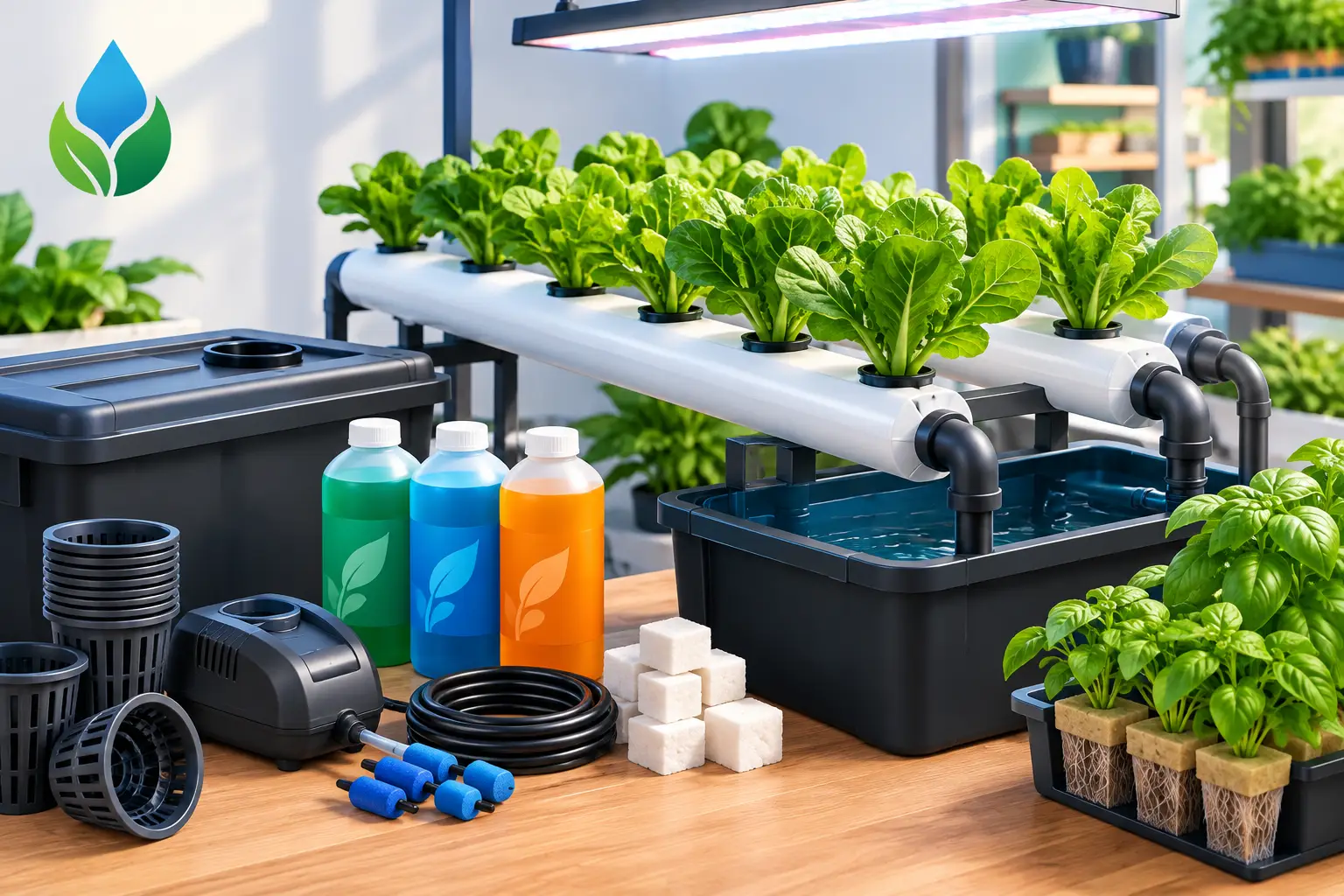
Deep water culture places net pots above an aerated nutrient solution. It is straightforward, productive and popular for leafy greens and herbs, provided water temperature and oxygen levels stay in range. An air pump, air stone, suitable reservoir and reliable net pots are not optional extras in this system.
Drip irrigation is a flexible choice for coco, clay balls and other media. It can be scaled from a few handily positioned pots to a multi-plant system using a pump, timer, lines and drippers. Run-to-waste systems are easier to manage than recirculating systems for many new growers, while recirculating systems can reduce water use but demand closer monitoring.
For propagation, keep it simple. A humidity dome or propagator, clean trays, plugs or starter cubes, and a gentle light help cuttings and seedlings establish before they move into a larger system. Strong roots at this stage make every later decision easier.
Best hydroponic supplies: build around the essentials
There is no single best brand or setup for every garden. There are, however, a few supply categories that deserve priority because they directly influence plant health and consistency.
Nutrients matched to the growth stage
Hydroponic nutrients need to supply the full range of macro and micronutrients in a form plants can absorb. Choose a complete base nutrient designed for your medium and system, then follow a feeding schedule as a starting point rather than a rulebook.
Most nutrient programs separate vegetative and flowering or fruiting formulas because plants use nutrients differently as their growth changes. Young plants generally benefit from a lighter feed, while heavy-feeding fruiting plants may need more support once flowers and fruit set. Quality lines from recognised suppliers such as Canna, Green Planet, Flairform, Floramax, House & Garden, Hy-Gen, Cyco and Professors Nutrients give growers clear programs to work from.
Additives can have a place, but they should solve a specific problem or support a clear goal. Root stimulants are useful during establishment, silica can support plant structure, and calcium and magnesium supplements may be needed with soft water, reverse-osmosis water or certain LED-grown crops. Starting with too many additives can make diagnosis difficult and unnecessarily raise your cost per grow.
pH and EC tools that take out the guesswork
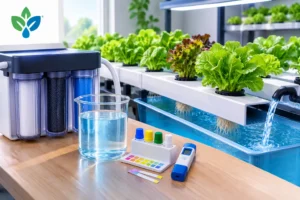
If nutrient strength and pH are not measured, you are largely guessing at what is reaching the root zone. A quality pH meter and EC meter are among the best investments a hydroponic grower can make.
pH affects nutrient availability. For many hydroponic crops, a root-zone pH around 5.5 to 6.5 is a practical working range, though the ideal point depends on the plant and growing medium. When pH drifts too far, nutrients can be present in the water but unavailable to the plant, leading to deficiency-like symptoms.
EC measures the concentration of dissolved salts in the nutrient solution. It helps you avoid feeding too weakly or too strongly. High EC can stress roots and cause leaf-tip burn, while low EC may slow growth. Calibrate meters regularly, keep probes clean and use fresh buffer solutions. These small habits protect much larger investments in plants, nutrients and electricity.
Lighting that suits the crop and footprint
Plants cannot outgrow poor lighting. Modern LED grow lights are efficient, produce useful plant-focused light and generally run cooler than older lamp systems. The right fixture is not simply the one with the highest wattage. It must cover your grow area evenly and provide an appropriate intensity for the crop stage.
Seedlings and cuttings need modest light. Vegetative plants can handle more, while flowering and fruiting plants need enough intensity to support heavy production. Positioning matters just as much as the fixture itself. A light mounted too close can bleach or stress leaves; one mounted too high wastes useful output and encourages stretching.
Grow tents help make lighting more efficient by containing reflected light and creating a controlled space. Choose a tent that fits the room, allows enough height for the light and filter, and leaves room to access plants without crushing foliage. Check zips, seams, poles and duct ports before buying. A tent is a working environment, not just a cupboard with shiny walls.
Ventilation and temperature control
Fresh air supports healthy transpiration, helps manage humidity and strengthens stems. In an enclosed tent, an extraction fan and ducting remove warm, humid air while passive vents or an intake fan bring fresh air back in. A carbon filter is useful where odour control is needed, but it adds resistance to airflow, so fan sizing must account for it.
Choose fans based on the volume of the space, duct length, bends and any filter attached. Undersized extraction is a common cause of heat and humidity issues, especially during a warm Australian summer. Circulation fans inside the space are also valuable. They should create a gentle movement through the canopy rather than blast one plant continuously.
A thermometer and hygrometer give you a clear picture of conditions. Temperature, humidity and airflow work as a team. When humidity remains high with poor air exchange, fungal problems become more likely. When air is too hot and dry, plants can drink faster than roots can comfortably supply water.
Irrigation, reservoirs and dependable fittings
Watering equipment often looks minor until a failed fitting leaves a puddle on the floor. Use suitable tubing, connectors, taps and clamps for the system, and test it with plain water before adding nutrients. Keep spare elbows, joiners and irrigation line on hand. They are inexpensive and can save a grow when a line cracks or a layout changes.
A reservoir should be opaque to limit algae growth, easy to clean and large enough that the nutrient solution does not swing wildly between top-ups. Larger volumes are generally more stable, but only if you can still access the reservoir for checking, mixing and cleaning. Make sure pumps are appropriate for the lift height and number of drippers in the system.
Do not overlook cleanliness and plant protection
Healthy plants are easier to grow than plants that are constantly recovering from pests, pathogens or nutrient lockout. Clean reservoirs between cycles, remove dead leaves promptly and sanitise propagation gear before reuse. Good hygiene is practical prevention, not extra work for its own sake.
Keep a close eye on the underside of leaves, new growth and the growing medium. Early signs of aphids, mites, thrips, fungus gnats or powdery mildew are much easier to manage than a full outbreak. Select pest-control products according to the plant, the pest, the growth stage and whether edible crops are involved. Better airflow, sensible watering and clean surroundings should sit alongside any treatment plan.
Spend where consistency matters most
A sensible budget puts reliable measurement, appropriate light, ventilation and nutrient management ahead of novelty products. You can expand an irrigation system later or trial a specialised additive after the basics are performing well. Cutting corners on a pH meter, extraction fan or light often costs more through slower growth, stressed plants and disappointing harvests.
Compatibility matters too. Confirm the size of ducting and fittings, the load rating of timers, the dimensions of a tent, and whether a nutrient is designed for hydroponics, coco or soil. If you are unsure, personalised advice can prevent a costly mismatch. Hunter Hydro can help match equipment to your plant type, available space and production goals rather than pushing a one-size-fits-all kit.
The best setup is the one you can monitor, maintain and improve with confidence. Start with dependable foundations, watch how your plants respond, and make one considered change at a time. Your plants will give you the feedback – greener growth, stronger roots and more rewarding harvests.