A few flying insects around a reservoir or pale flecks spreading across fresh leaves can become a major problem faster than most growers expect. The best indoor plant pest controls are rarely one product applied after damage appears. They are a practical system: identify the pest accurately, reduce the conditions it likes, then choose a treatment that suits the plant, growth stage and grow space.
For houseplants, tents, greenhouses and hydroponic gardens, early action protects more than leaf appearance. Pests reduce photosynthesis, slow root development, spread disease and divert a plant’s energy away from strong growth and yield. The goal is not to spray everything on sight. It is to keep pest pressure low enough that your plants can keep performing.
Best Indoor Plant Pest Controls Start With Identification
A fungus gnat, thrip and spider mite do not respond to the same approach. Treating the wrong culprit can waste time, stress the crop and leave the real issue growing unchecked. Make regular plant checks part of the grow routine, especially when plants are newly purchased, moved indoors or entering rapid vegetative growth.
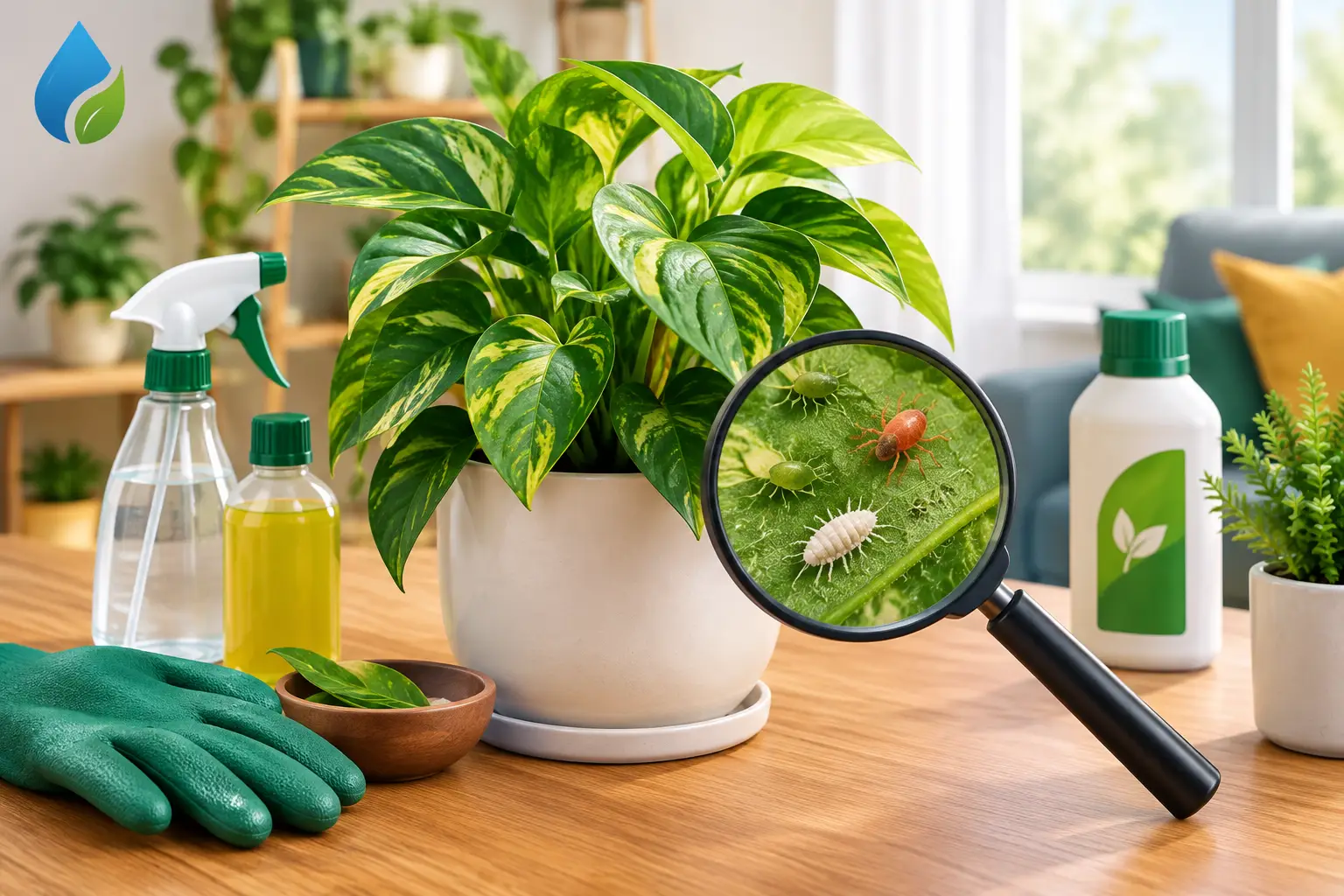
Look under leaves, along stems, around the growing media and at the reservoir lid. A hand lens makes small pests far easier to identify. Yellow sticky traps are also valuable monitoring tools. They show whether flying insects are present and whether numbers are increasing, but they will not solve a large infestation on their own.
Common signs are usually quite distinct:
- Fungus gnats are small dark flies around moist media. Their larvae can damage fine roots, particularly on young plants and seedlings.
- Spider mites cause fine pale stippling, bronzing and, in advanced cases, webbing beneath leaves or around growing tips.
- Thrips leave silvery scarring, distorted new growth and tiny dark droppings on foliage.
- Aphids cluster on soft new shoots and leaf undersides, leaving sticky honeydew that can lead to sooty mould.
- Whiteflies lift off in a small cloud when disturbed and also leave honeydew behind.
Scale insects and mealybugs are slower moving but equally worth catching early. Check leaf joints, stems and crowded areas where foliage meets the main branch.
Prevention Is the Most Effective Pest Control
Healthy plants are not immune to pests, but a well-managed grow room gives pests fewer opportunities to establish. Quarantine new plants, clones and cuttings away from the main crop for a period before introducing them. Inspect both sides of leaves and remove any dead foliage or loose plant material that could shelter insects.
Environmental control matters. Stagnant, humid conditions can favour several pest and disease issues, while overly dry and hot spaces can help spider mites multiply. Use suitable extraction, circulation fans and temperature control to keep air moving gently through the canopy. The right setting depends on your crop and stage, but a packed tent with poor airflow is always harder to manage.
Avoid overwatering media-grown plants. Constantly wet top layers are an open invitation for fungus gnats. Let the media dry to the appropriate point between irrigations, ensure drainage is working and clear runoff rather than allowing pots to sit in it. In hydroponic systems, keep reservoirs covered, clean up nutrient spills promptly and prevent algae from developing around wet surfaces.
Good hygiene carries through the whole setup. Clean scissors between plants, disinfect trays and benches between cycles, and do not bring used pots or outdoor tools into a clean grow without washing them first. These small habits are among the best indoor plant pest controls because they stop an infestation before it needs a stronger response.
Match the Control to the Pest and Crop Stage
Once you know what you are dealing with, begin with the least disruptive method likely to work. On a few affected houseplants, physically removing pests can be surprisingly effective. Wipe mealybugs or scale from stems, prune heavily infested leaves where practical, and rinse sturdy foliage with a controlled stream of water. Make sure the plant dries with good airflow afterwards.
For flying pests, sticky traps help monitor adults while treatment targets the life stage causing damage. Fungus gnat larvae live in damp media, so adjusting irrigation is essential. Biological larval controls may also suit media-based plants, particularly when applied early and according to the product directions. Adult traps alone can make numbers look better while larvae keep developing below the surface.
Spider mites and thrips require persistence because eggs and hidden life stages can survive an initial treatment. Check the label for reapplication intervals and inspect plants again between applications. One thorough treatment followed by no follow-up is a common reason infestations rebound.
Contact sprays and soaps
Insecticidal soaps, horticultural oils and other contact-style products can be useful against soft-bodied pests when coverage is thorough. They work where the spray lands, so leaf undersides, stem junctions and dense canopy areas need attention. A quick mist across the top of the plant will not reach most of the pest population.
There are trade-offs. Oils and soaps can mark or stress sensitive foliage, particularly under intense LED lighting, high temperatures or when plants are already drought-stressed. Test any product on a small area first, apply during the cooler part of the light cycle where label directions allow, and do not mix products unless the label specifically permits it. Never assume a natural product is automatically harmless to plants, beneficial insects or people.
Biological controls
Beneficial insects and predatory mites can be an excellent fit for indoor gardens where prevention and long-term balance are the priority. Different beneficials target different pests, so the correct identification still matters. They also need an environment that supports them and can be harmed by broad-spectrum pesticide use.
Biological control is generally most effective when introduced early, before pest numbers explode. It can be less convenient than a single spray, but it is often a smart option for growers who want a more integrated approach. Plan ahead if using beneficials, because incompatible sprays may limit the options available afterwards.
Targeted insecticides
Where pest pressure is severe, a registered targeted insecticide may be necessary. Choose only products labelled for the relevant pest, plant situation and indoor use, then follow the Australian label exactly. Pay close attention to dilution rates, personal protective equipment, ventilation requirements, re-entry instructions and withholding periods where crops are edible.
Do not apply more often or at a higher rate in the hope of a faster result. That can damage plants and contributes to resistance, especially with thrips and mites. Rotate suitable modes of action across repeated treatment cycles where the label and your crop situation allow. If you are growing herbs, leafy greens or fruiting plants, product suitability and withholding directions are especially important.
A Simple Response Plan for Indoor Growers
When pests appear, isolate affected plants first. Move them away from healthy stock if possible, and avoid brushing against clean plants after handling infested ones. Then inspect the full grow space, not just the worst-looking plant. Pests travel on hands, tools, foliage and clothing, while some can move quickly through a crowded canopy.
Next, reduce the pest-friendly conditions. Improve airflow, remove damaged leaves, clean the area and correct watering practices. Add monitoring traps where relevant. Only then apply the chosen treatment with complete coverage and a clear follow-up date in mind.
Keep notes on what you find, what you apply and when. This is particularly useful in hydroponic rooms, where a recurring issue may point to a sanitation gap, unsuitable humidity, overcrowding or plant material entering the space already infected. Consistent records turn pest control from guesswork into a repeatable grow-room process.
When to Ask for Help Choosing a Control
The right answer changes with the plant, the pest, the size of the infestation and whether you are in propagation, vegetative growth or close to harvest. A product that is sensible for an ornamental plant in a lounge room may not be suitable for an edible crop or a flowering plant in a tightly managed tent.
If leaves are rapidly deteriorating, you cannot identify the pest, or several controls have failed, get advice before adding more products. Bringing clear photos of the pest, leaf damage and grow environment can make recommendations far more accurate. At Hunter Hydro, the focus is on matching the control method to your setup, not piling unnecessary products into the trolley.
A clean grow space, a weekly leaf inspection and a quick response to the first signs of trouble will do more for plant health than any last-minute rescue treatment. Give pests fewer places to hide, and your plants have more energy for the growth you actually want to see.