A deep water culture bucket can grow a very impressive plant with little more than a reservoir, air pump and net pot. An ebb and flow tray can run several plants with tidy spacing and a shared nutrient tank. In the ebb and flow vs DWC decision, neither system is automatically better. The right choice comes down to how many plants you want to run, how much hands-on maintenance suits you, and how reliably you can control your grow environment.
Both systems replace soil with a nutrient solution and give roots direct access to water and minerals. The major difference is how those roots receive oxygen. That difference changes the way each system responds to heat, power outages, root-zone issues and everyday grower mistakes.
Ebb and Flow vs DWC: the core difference
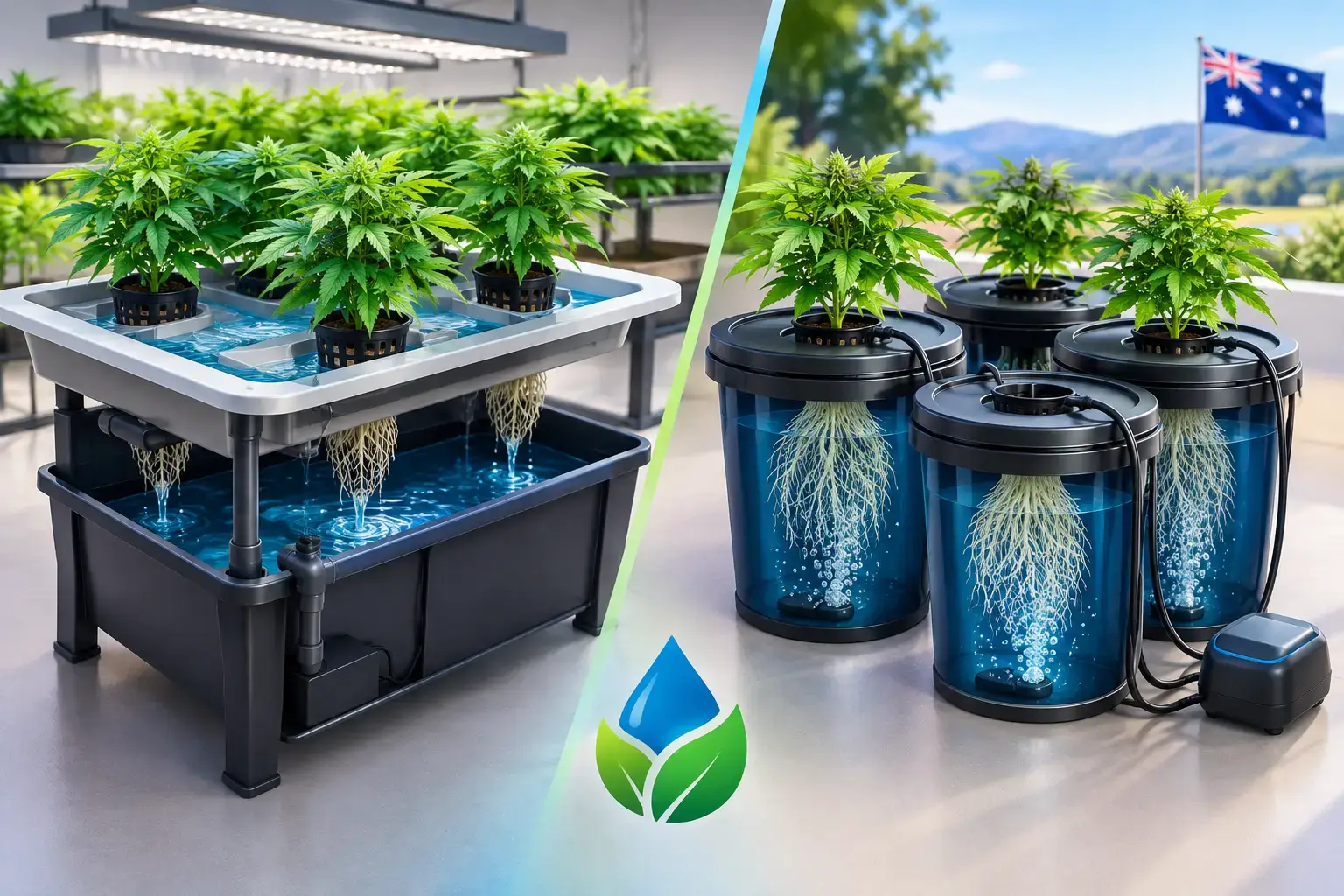
DWC, or deep water culture, keeps plant roots suspended in a continuously aerated nutrient solution. An air pump drives air through air stones, creating bubbles that keep dissolved oxygen available around the roots. The plant can feed whenever it needs to, which supports fast vegetative growth when water temperature, pH, EC and lighting are all on point.
Ebb and flow, also called flood and drain, works in cycles. A pump floods a tray or pot system with nutrient solution, then allows it to drain back to the reservoir. During the drain period, fresh air is pulled through the root zone. Plants are commonly grown in clay balls, coco, rockwool or another suitable media that provides support and retains a little moisture between floods.
Put simply, DWC keeps roots in water all the time, while ebb and flow alternates between feeding and aeration. Both can produce healthy plants and strong yields. Their day-to-day demands are simply different.
Why growers choose DWC
DWC appeals because it is simple to understand and quick to assemble. A basic single-plant system needs a lightproof bucket or reservoir, net pot, growing media, air pump, air stone and nutrient solution. For a first hydro grow, it makes the relationship between roots, nutrients and oxygen easy to see.
When conditions are stable, DWC can deliver vigorous growth. Roots have constant access to water and nutrients, and the high oxygen level around the root zone supports active nutrient uptake. It is a particularly good option for growers who want to focus closely on a small number of plants rather than manage a larger tray.
The trade-off is that DWC has little buffer against high water temperatures. In an Australian summer, a reservoir sitting in a warm tent, garage or greenhouse can heat up quickly. Warm water holds less dissolved oxygen, while pathogens are more likely to thrive. Root problems can move fast in DWC because the whole root mass shares the same solution.
DWC also relies heavily on continuous aeration. A short power interruption may not cause immediate damage, but a failed air pump or blocked air stone can become serious if it goes unnoticed. Using quality equipment, checking bubbles daily and keeping a spare air pump on hand are sensible precautions for a serious DWC grower.
DWC suits you if you want simplicity at a small scale
A DWC system is often a strong fit for one to four plants, particularly where the grow space is temperature-controlled and easy to inspect. It suits growers who are happy to check pH and EC regularly, top up the reservoir as plants drink, and change nutrient solution on a consistent schedule.
It is less forgiving if you cannot keep water cool or if the grow room experiences frequent heat spikes. A reservoir thermometer is not optional here. Aim to keep the nutrient solution in a healthy range, generally around 18-22°C, and avoid letting it sit warm for extended periods.
Why growers choose ebb and flow
Ebb and flow earns its place in larger home grows because it can feed multiple plants from one reservoir without keeping the roots permanently submerged. The timed flood cycle gives growers control over how often plants are watered, while the draining stage refreshes air around the roots.
This method works especially well with pots or trays of media. The media stabilises plants, making ebb and flow practical for larger root systems and a more organised canopy. It can also be easier to move or inspect individual plants than in a shared DWC setup, depending on the tray design.
Flood frequency is adjustable. Young plants in a moisture-retentive media may need fewer floods than established plants under strong LED lighting. A hot, dry grow room may require more frequent cycles than a cool room. That flexibility is valuable, but it means the timer needs to be set with your plant size, media, airflow and environment in mind.
Ebb and flow does have more components to manage. You will need a reservoir, pump, timer, tray or controller, fittings and reliable return drainage. A poorly fitted line, overflowing tray or blocked return can create a mess quickly, so test the system with plain water before plants go in.
Ebb and flow suits growers scaling up
For growers running several plants of similar size and stage, ebb and flow can be an efficient step up from hand-watering. One reservoir can feed the whole group, helping keep nutrient strength more consistent across the canopy. It can be a practical choice for a tent, indoor room or greenhouse where floor space is used well.
It also offers a little more resilience during a brief power outage. The media retains moisture around the roots after the tray drains, unlike DWC, where aeration is continuous. That does not mean you can ignore equipment failures, but the root zone usually has more breathing room.
Comparing maintenance, costs and risk
The best system is not always the one with the highest potential growth rate. It is the one you can monitor and maintain properly through every stage of the grow.
DWC is usually cheaper and faster to start at a small scale. Fewer fittings mean fewer potential leaks, and cleaning a single bucket system is straightforward. However, the reservoir can require frequent attention as plants mature. Daily water-level checks, regular pH readings and EC monitoring matter because a small volume can change quickly as plants drink more water than nutrients, or vice versa.
Ebb and flow has a higher initial setup cost because of the tray, pump, timer and plumbing. It can be more time-consuming to clean after harvest, especially if roots enter drainage fittings. In return, it can make routine feeding easier across more plants and gives you more control over wet-dry cycles.
Both systems benefit from the same core discipline: start with clean equipment, use a suitable nutrient line, measure pH and EC with calibrated metres, and keep the reservoir covered from light. Light leaks encourage algae, while dirty equipment and stale solution can turn small issues into root-zone trouble.
Plant size, media and grow space matter
DWC is commonly chosen for plants that can be trained and supported from a single net pot. As the canopy becomes heavier, extra support may be needed above the bucket because the root zone itself does not anchor the stem as firmly as a pot full of media.
Ebb and flow gives you more options. Clay balls offer excellent drainage and aeration, while coco-based setups retain more moisture and can reduce the need for frequent floods. Your media choice should match your irrigation schedule rather than work against it. A highly water-retentive media flooded too often can stay overly wet, while a very free-draining media may dry too quickly between cycles.
Think about access before choosing either system. Can you lift a DWC lid and inspect roots without disturbing the plant? Can you reach the ebb and flow reservoir for top-ups and cleaning? Can you safely drain and replace nutrient solution? Good access makes regular checks far more likely.
How to choose between DWC and ebb and flow
Choose DWC when you want a straightforward, low-cost system for a small plant count and can maintain stable reservoir temperatures. It rewards close monitoring and is ideal for learning how hydroponic roots respond to oxygen, nutrients and environmental changes.
Choose ebb and flow when you want to run more plants, prefer media-supported roots, or need greater flexibility with irrigation timing. It requires more planning at the start, but it can make a multi-plant garden easier to manage once dialled in.
If you are torn between the two, start with the system that matches your current grow space rather than the biggest yield goal on paper. A well-maintained DWC bucket will outperform a poorly managed flood tray, and a correctly sized ebb and flow system can make expansion far easier. The most useful setup is the one that gives you clear control, healthy roots and the confidence to keep improving each crop.