A greenhouse can be 10°C hotter than expected by late morning, then damp and still once the sun drops. That swing is where plant stress, fungal pressure and uneven growth begin. Greenhouse climate controllers take the guesswork out of managing those changes by coordinating fans, extraction, heaters, humidifiers, dehumidifiers and other equipment around the conditions your plants actually experience.
For home gardeners and serious hobby growers alike, the goal is not to create a perfectly fixed temperature. Plants respond best to a stable, suitable range that matches their species and growth stage. A well-chosen controller helps maintain that range without having to manually switch equipment on and off several times a day.
What greenhouse climate controllers actually do
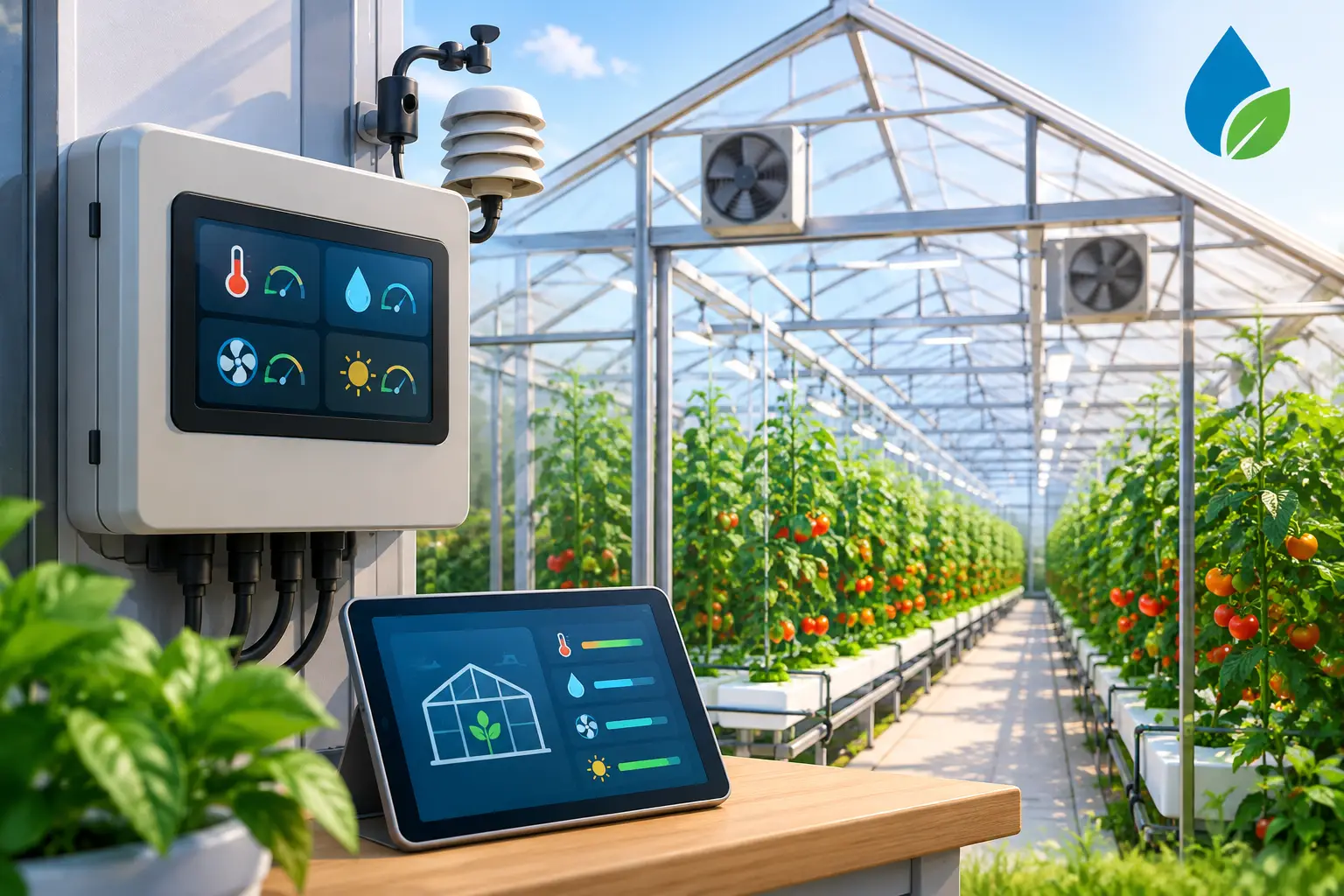
At their simplest, greenhouse climate controllers read one or more sensors and activate equipment when a set point is reached. If temperature rises above your chosen limit, the controller can start an extraction fan or open a motorised vent. If humidity remains too high overnight, it can run airflow equipment or a dehumidifier. More advanced units can manage several devices at once, using temperature, relative humidity, vapour pressure deficit (VPD), CO2 and time schedules.
That matters because these factors work together. Warm air holds more moisture than cool air, so a greenhouse that looks fine during the day can reach damaging humidity levels at night. Likewise, running a powerful extraction fan may lower temperature but also strip out humidity and any added CO2. The best setup is rarely the one with the most equipment. It is the one where each component responds in the right order.
For many growers, a temperature and humidity controller is the most useful starting point. It gives you the information needed to make decisions based on conditions rather than a quick look through the greenhouse door.
Start with the conditions your crop needs
Before choosing a controller, consider what you are growing, the size of the space and when it is used. Leafy greens, herbs, seedlings, ornamentals and fruiting crops all tolerate conditions differently. Young plants usually need gentler airflow and more consistent warmth than established plants, while dense flowering or fruiting canopies often need stronger humidity management.
Your local climate matters too. In the Hunter and wider NSW, summer heat can build quickly in a glazed or polycarbonate greenhouse. During cooler, wet periods, condensation and poor airflow may become the larger concern. A controller should solve the main problem in your specific space, not add complexity for its own sake.
Take readings for a few days before buying more gear. Place a reliable temperature and humidity sensor at canopy height, away from direct sun, heaters and fan outlets. Note the high and low readings, along with when they occur. This quickly shows whether you need better extraction, circulation, heating, shading, moisture control or a combination.
Temperature is only part of the picture
Most growers notice heat first because wilting is obvious. Yet humidity can quietly cause just as much trouble. High relative humidity slows transpiration, reduces nutrient movement through the plant and creates favourable conditions for mould and fungal disease. Very low humidity can make plants transpire too quickly, especially when lights, heat and fans are all running.
VPD is a more useful measurement for growers wanting tighter environmental control because it considers both temperature and humidity. It indicates how strongly the air is drawing moisture from the leaves. You do not need to chase a VPD number at all costs, particularly in a small hobby greenhouse, but understanding the relationship helps explain why the same humidity reading may suit one temperature and be unsuitable at another.
Match the controller to the equipment
A controller can only manage the devices connected to it, so plan the system as a whole. For a small greenhouse, a basic thermostat may control an exhaust fan during hot periods and a heater during cold nights. Add a humidity function where condensation, disease or drying are regular issues.
Larger or more intensively managed spaces may benefit from a multi-stage controller. These units can bring on circulation fans first, then extraction, then cooling if the temperature continues to climb. Staging prevents every device from switching on at once, which can save energy and avoid dramatic environmental swings.
The equipment connected to a controller commonly includes:
- extraction fans and intake fans to exchange hot, humid air
- circulation fans to move air through the canopy and prevent stagnant pockets
- heaters to protect plants during cold nights and improve drying after lights-out
- humidifiers or dehumidifiers to manage moisture levels
- motorised vents, shade systems or evaporative cooling where the greenhouse design supports them.
Check electrical ratings before connecting anything. A controller must be rated for the voltage and load of the equipment it will run. Fans, heaters and dehumidifiers can draw considerable current at start-up, and a cheap timer or undersized switching device is not a safe substitute for the right controller. Where mains wiring or fixed installations are involved, use a qualified electrician.
Build control in layers, not all at once
A practical climate strategy starts with airflow. Internal circulation fans should gently move leaves throughout the canopy, rather than blast one side of the crop. This reduces temperature layering, helps strengthen stems and makes it harder for humid air to settle around foliage.
Next comes extraction and fresh-air intake. When temperature or humidity rises beyond your target, extraction removes hot, moist air while an intake point allows replacement air to enter. Passive intakes can work in smaller spaces, but they need enough opening area and a sensible path for air to travel across the greenhouse.
Heating is often most valuable at night or early morning, not because plants need tropical conditions, but because a modest rise in temperature can prevent condensation and keep growth more consistent. In some setups, running a heater briefly with circulation fans is more effective for drying the crop than running extraction alone in cold, wet weather.
Humidity control is more nuanced. A dehumidifier is helpful in a sealed or semi-sealed space, but it produces heat and needs drainage or regular emptying. A humidifier can support young plants in dry conditions, but should not create wet leaf surfaces. Set sensible thresholds and allow enough deadband – the gap between switching on and off – so equipment does not rapidly cycle.
Don’t overlook sensor placement and maintenance
A quality controller is only as accurate as the readings it receives. Put sensors at plant canopy height, where plants live, rather than beside the roof where heat gathers. Avoid direct sun, mist, dripper spray and the immediate stream from a heater or fan. In a long greenhouse, one sensor may not represent the whole space, so inspect for hot, cold or damp zones.
Clean fan guards, ducts and filters regularly. Dust reduces airflow, while blocked intakes make fans work harder for less result. Check that vents open freely, inspect cords for wear and compare sensor readings with a second reliable thermometer and hygrometer from time to time. Small errors can become costly when a controller is making every decision.
When CO2 control makes sense
CO2 can support photosynthesis when light, temperature, nutrition and water management are already on point. However, adding CO2 to a greenhouse with constant extraction is usually inefficient because the enriched air leaves as quickly as it is supplied. It also requires accurate monitoring and safe operating practices.
For most naturally ventilated hobby greenhouses, improving airflow, temperature stability, irrigation and nutrient management will deliver better value first. CO2 control becomes more relevant in a well-sealed, purpose-built environment where the rest of the climate system can maintain stable conditions. It is a tool for refining a strong grow, not a shortcut around weak fundamentals.
Choose control that you will actually use
A simple controller with clear settings often produces better results than an advanced unit that is never properly configured. If you are starting out, choose a model that lets you set temperature and humidity targets, see current readings and connect the equipment you already own. Growers running multiple zones, high-value crops or more specialised environmental equipment may benefit from programmable stages, alarms and remote monitoring.
Keep a short record after changes are made. Note the daily maximum and minimum temperature, humidity patterns, watering frequency and how the plants respond. This is where climate control becomes genuinely useful: you can connect a change in the environment to stronger roots, healthier leaves, better flower development or reduced disease pressure.
The right greenhouse controller should make your grow feel calmer, not more complicated. Start with accurate measurements, improve the biggest weak point first, and build from there. When your environment supports the plant at every growth stage, bigger yields become much simpler to achieve.