A spare room, garage corner or compact grow tent can produce healthy herbs, leafy greens, houseplants and fruiting crops, but only when the conditions are right. The best Newcastle indoor gardening equipment is not necessarily the biggest or most expensive setup. It is the equipment that matches your available space, the plants you want to grow and the level of control you need.
Indoor growing gives you the chance to manage light, temperature, airflow and nutrition far more closely than an outdoor garden. That control can lead to faster, more consistent growth, but it also means each component needs to work with the next. A powerful light without adequate ventilation creates heat stress. A nutrient program without accurate pH and EC readings can leave plants unable to access what you feed them.
Start with the growing space
Before choosing lights or nutrients, measure the area you have to work with. Include the height from floor to ceiling, not just the footprint. Vertical clearance affects the size of your tent, the distance between light and canopy, fan placement and how much room plants have to develop.
A grow tent is often the simplest way to create a controlled environment. It reflects light back towards plants, contains humidity and makes it easier to manage airflow and odours. For a small herb garden or propagation area, a compact tent or shelving setup may be enough. For larger plants or a more productive hydroponic garden, you will need room for a reservoir, extraction fan, filter, ducting and access for daily checks.
It pays to leave practical working space. If you cannot reach the back plants, empty a reservoir or inspect a fan easily, routine maintenance soon becomes a chore. Good access helps you notice early signs of pests, nutrient issues and irrigation faults before they affect the crop.
Choose lighting for the plant and the area
Light drives photosynthesis, so it is usually the most influential part of an indoor setup. Modern LED grow lights are popular because they provide useful plant spectrum while producing less heat and using less power than many older lamp systems. They are especially useful in tents, bedrooms and smaller enclosed spaces where excess heat can become difficult to manage.
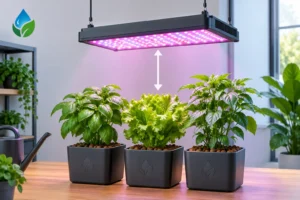
The right fixture depends on the canopy area rather than simply choosing the highest wattage. A light that is too small creates weak growth around the edges. One that is too intense or positioned too close can bleach leaves, curl foliage or slow growth. Check the recommended coverage area and hanging height, then adjust as plants respond.
Seedlings and cuttings need gentler light than established plants. During vegetative growth, plants generally benefit from broad, even coverage that supports leaf and root development. Fruiting and flowering crops require adequate intensity to support the higher energy demand of producing flowers and fruit. A timer is essential, as consistent light cycles help plants maintain predictable growth.
Heat is part of the lighting decision
Every light adds some heat. Even efficient LEDs need clearance above the fixture and moving air around the canopy. If your grow area warms up significantly when lights run, improve extraction before assuming the plants need more water or nutrients. Heat stress and underfeeding can look similar at first, but the solution is very different.
Build airflow from intake to extraction
Fresh air helps plants exchange gases, strengthens stems and reduces the damp, still conditions that favour fungal problems. In a tent, the usual approach is to bring fresh air in through passive vents or an intake fan, circulate it with an oscillating fan, then remove warm humid air with an extraction fan and ducting.
Fan size should suit the volume of the space and the resistance created by ducting, bends and carbon filters. Long duct runs and sharp turns reduce airflow, so keep ducting as short and straight as practical. A filter is useful where odour control matters, but it should be correctly matched to the extraction fan to avoid restricting performance.
Aim for gentle leaf movement rather than a constant blast. Airflow directly on one section of the plant can cause windburn, while stagnant corners encourage moisture to linger. Position circulation fans to move air across and beneath the canopy, then check that leaves are not sitting wet after watering or feeding.
Select a watering method you can maintain
Hand watering suits many first-time indoor gardeners because it keeps the system simple and gives you regular contact with your plants. You can feel the weight of pots, inspect roots where visible and respond quickly when a plant needs attention. The trade-off is that larger gardens can become time-consuming and inconsistent if watering is rushed.
For frequent watering or hydroponic systems, irrigation equipment can improve consistency. Dripper systems, pumps, timers and reservoirs allow you to deliver measured feeds on a schedule. They are particularly useful for coco coir and other media that perform well with regular irrigation. However, automated irrigation still needs checking. A blocked dripper, failed pump or empty reservoir can affect plants quickly.
Choose a reservoir that gives enough capacity for your garden without leaving nutrient solution sitting too long. Keep it covered to reduce light exposure, algae growth and contamination. In warmer conditions, reservoir temperature also matters. Warm water holds less dissolved oxygen and can create problems around the root zone.
Treat pH and EC as everyday tools
Healthy plants need nutrients in the right concentration and within the right pH range. This is why a reliable pH meter and EC meter are among the most useful pieces of indoor gardening equipment you can own.
pH affects nutrient availability. If it drifts too high or too low, nutrients may be present in the solution but unavailable to the plant. EC measures the overall concentration of dissolved nutrients, helping you avoid feeds that are too weak for vigorous growth or too strong for young plants and sensitive varieties.
There is no single reading that suits every crop, medium and growth stage. A young seedling needs a lighter feed than a well-established fruiting plant. Coco, deep-water culture and soil-based systems also behave differently. Start with the nutrient manufacturer’s guidance, monitor plant response and make changes gradually.
Keep meters clean, calibrate them as required and use quality calibration solutions. Guessing at pH and EC can cost more in slow growth and wasted nutrients than the measuring tools ever will.
Match nutrients and media to your method
Your nutrient line should suit both the plants and the system. Mineral nutrients are commonly used in hydroponics and coco because they are readily available and easy to measure. Soil growers may prefer a different approach, but even soil-based indoor gardens benefit from understanding what is being applied and when.
Use a complete base nutrient designed for the relevant growth stage before adding extras. Additives can be valuable for particular goals, such as root development, calcium support or flowering performance, but they cannot compensate for poor lighting, unsuitable temperatures or an unbalanced base feed. More bottles do not automatically mean better results.
For growing media, consider water retention, drainage and how often you can realistically irrigate. Coco offers excellent aeration and control when paired with regular feeding. Clay pebbles suit recirculating hydroponic systems but need dependable equipment. Soil and premium potting blends are more forgiving for hand-watered plants, although they can be slower to dry and less precise to manage.
Do not overlook propagation and plant protection
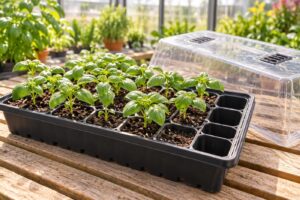
Strong crops begin with healthy seedlings or cuttings. Propagation trays, humidity domes, heat mats and suitable low-intensity lighting can improve early establishment, especially during cooler Hunter-region weather. Avoid keeping propagation areas excessively wet or sealed for too long, as high humidity without airflow can encourage disease.
Inspect leaves, stems and the growing medium regularly for pests or fungal issues. Look underneath leaves as well as on top. Sticky traps can help monitor flying insects, while good hygiene, clean tools and sensible spacing reduce the chance of problems spreading. If treatment is needed, identify the issue first rather than applying products at random.
Buy a system, not a trolley full of parts
The most reliable setup is built around compatibility. Your light should suit the tent size. Your fan should suit the tent volume and filter. Your nutrient schedule should suit the medium and irrigation method. Your measuring tools should support the level of precision your system requires.
That is where local advice can save time and money. Hunter Hydro can help match equipment to your plants, space and production goals, whether you are setting up a small indoor herb garden or refining an established hydroponic room. Personalised recommendations are more useful than buying equipment based on wattage, price or hype alone.
Start with a clean, manageable setup and learn how your plants respond to it. Once light, airflow, watering and nutrition are consistent, expanding your garden becomes a much more rewarding decision.