How to Treat Powdery Mildew on Plants Fast
That soft, white dust on a leaf is not just a cosmetic issue. Powdery mildew can quickly reduce photosynthesis, weaken new growth and spread across a tent, greenhouse bench or outdoor vegie patch. To treat powdery mildew on plants properly, remove active infection and correct the conditions that allowed it to establish in the first place.
Unlike many fungal diseases, powdery mildew does not need wet leaves to thrive. It often takes hold when humidity is high, airflow is poor, foliage is crowded and temperatures swing between day and night. That makes it a familiar problem for indoor growers, particularly through cooler months when tents and grow rooms are kept closed up.
Recognise powdery mildew before it spreads
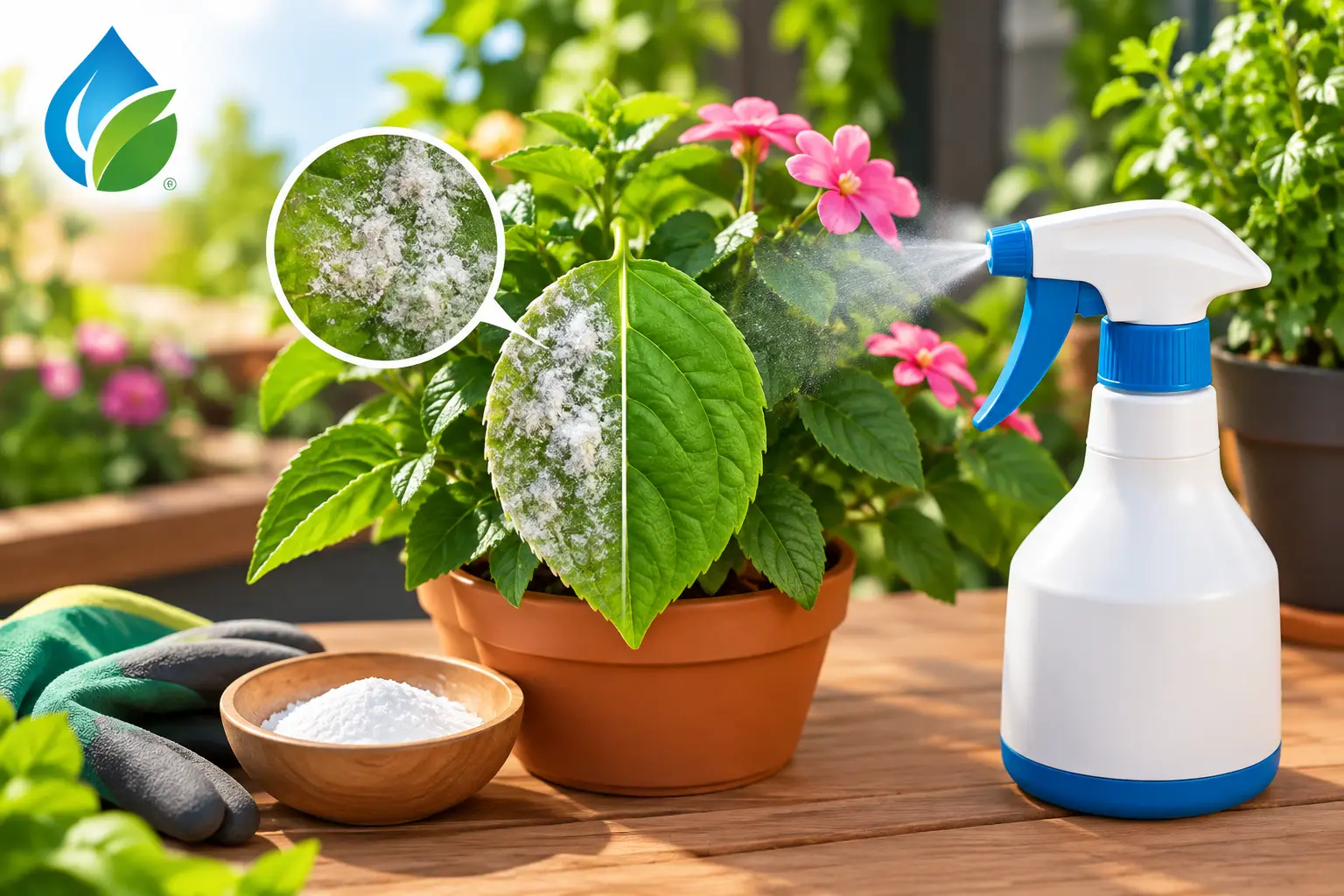
Powdery mildew usually starts as small, pale patches on upper leaf surfaces. They may look like flour, talcum powder or a faint grey-white film. As the disease progresses, patches join together, leaves yellow or curl, and affected growth becomes less productive.
Check the undersides of leaves as well, especially on dense plants and around the middle and lower canopy. Young leaves, soft shoots and crowded growth points are common starting places. On flowering plants, inspect carefully without handling flowers more than necessary.
Do not assume every white mark is mildew. Mineral residue from foliar sprays can leave spotting, while pests such as mealybugs create fluffy white clusters. Powdery mildew normally wipes or smudges slightly, though rubbing infected leaves is not a solution and can spread spores to healthy tissue.
How to treat powdery mildew on plants
The most reliable approach combines sanitation, targeted treatment and environmental control. Spraying alone may knock back visible growth, but mildew commonly returns if the growing area remains humid and stagnant.
1. Isolate and prune affected material
Move a lightly affected potted plant away from healthy plants where practical. In a grow tent or fixed greenhouse setup, create space around the affected plant and work on healthy plants first, infected plants last.
Remove leaves and shoots with heavy coverage. Use clean snips, place removed material straight into a bag and dispose of it rather than composting it. For a plant with only one or two small patches, removing those leaves early can prevent a much bigger outbreak.
Avoid taking too much foliage in one session. A severely defoliated plant is already under stress, so focus on the worst material first. Clean your tools, hands and work surfaces after pruning to avoid carrying spores through the crop.
2. Improve airflow through the canopy
Powdery mildew loves still pockets of air. Thin congested interior growth where appropriate, lift leaves off the substrate and make sure plants are not packed leaf-to-leaf. This is especially important in hydroponic systems where vigorous growth can fill a growing space faster than expected.
Oscillating fans should move leaves gently rather than blasting one section of the canopy. Air needs to circulate above, through and beneath plants. In tents, check that your extraction fan is exchanging air effectively and that ducting is not crushed, blocked or undersized for the space.
Good airflow is not only about disease prevention. It supports transpiration, strengthens stems and helps create a more even climate across the canopy.
3. Bring humidity under control
Relative humidity is often the deciding factor. A humid room with cool nights and poor air exchange can produce condensation in dense foliage, even when leaves do not look wet.
Use a reliable thermo-hygrometer at canopy height, not just near an intake or on the floor. For many indoor crops, keeping humidity moderate and stable is more useful than chasing a single perfect number. Young plants can usually handle more humidity than mature plants, while dense late-stage canopies generally need drier conditions and stronger air movement.
If humidity climbs after lights-off, increase extraction, adjust the timing of irrigation, avoid overfilling the room with plants and consider a correctly sized dehumidifier. In a greenhouse, venting early in the day can remove overnight moisture before heat builds up. Outdoors, give plants adequate spacing and avoid planting them in enclosed, shaded corners.
4. Apply a suitable fungicide or biological treatment
Choose a product labelled for powdery mildew and for the plant you are growing. This matters even more for herbs, fruiting plants and edible crops. Follow the Australian label directions exactly, including dilution rates, application timing, personal protective equipment and harvest withholding periods where applicable.
Contact products work best when coverage is thorough. Spray upper and lower leaf surfaces, stems and sheltered parts of the canopy without drenching the growing medium or reservoir. Treat at the cooler end of the light cycle, with grow lights off or lifted away, and allow foliage to dry before full light intensity returns. Wet leaves under powerful LEDs can scorch.
Organic-style options such as potassium bicarbonate, sulphur-based products, horticultural oils and biological fungicides can be useful, but they are not interchangeable. Oils can cause phytotoxicity under strong lighting or high temperatures. Sulphur should not be applied close to an oil treatment. Some products are better for prevention than active outbreaks, so read the label rather than relying on a one-size-fits-all recipe.
For indoor food crops, avoid improvised sprays made from kitchen ingredients. Homemade milk, bicarbonate or detergent mixes are widely discussed, but concentration errors and residue can damage foliage, alter pH on leaf surfaces or create problems around flowers. A properly labelled product and a controlled environment are a safer, more repeatable path.
5. Recheck and repeat at the right interval
Powdery mildew spores can remain on nearby leaves and surfaces after the obvious patches disappear. Inspect plants every day for the next week, then follow the treatment interval stated on the product label. Remove newly infected leaves promptly.
At the same time, wipe down tent walls, trays, fan guards and benches. Empty plant waste, clean tools and do not reuse contaminated stakes or clips without washing them. If an outbreak was widespread, clean the entire space between crops before starting the next run.
Protect your crop without stressing it further
An infected plant needs steady care, not a pile-on of corrections. Keep root-zone management consistent by maintaining suitable pH and EC for the crop and growth stage. Avoid suddenly increasing nutrient strength to force new growth. Overfeeding does not fix fungal disease and can create soft, lush foliage that is more susceptible to further issues.
Irrigate at a time that allows leaves and the room to dry down before the coolest part of the cycle. In recirculating hydroponic systems, keep reservoirs covered and clean, but remember that powdery mildew is principally an airborne foliage disease. Fixing the reservoir alone will not solve an airflow or humidity problem above the canopy.
Be cautious during flowering. Removing badly infected leaves is sensible, but avoid saturating flowers with sprays unless the product is specifically labelled for that crop and stage. Residue, mould risk and harvest timing all need consideration. When an outbreak is severe late in flower, the right choice depends on crop type, how much material is affected and what treatment options are permitted on the label.
Prevent the next outbreak
Prevention starts before plants become crowded. Give each plant enough room for its expected size, set fans and extraction up from the beginning, and monitor temperature and humidity through both lights-on and lights-off periods. A cheap humidity reading can save a valuable crop.
Inspect new plants and cuttings before bringing them into your growing area. Quarantine is particularly worthwhile when plants have come from a nursery, swap or outdoor garden. Keep mother plants tidy, remove ageing leaves and clean propagation areas regularly, as young stock can carry an issue into every future cycle.
If powdery mildew keeps returning, do not just change sprays. Look for the pattern: a weak exhaust fan, a full reservoir room with no dehumidification, overly dense training, cool overnight temperatures or plants placed too close together. Correcting that bottleneck is what turns treatment into long-term control.
Healthy plants are not sterile plants. They are plants grown in a stable environment with enough light, air movement, sensible irrigation and close observation. If you are unsure which treatment or environmental adjustment suits your crop and setup, the Hunter Hydro team can help match a practical solution to your space, stage and growing goals. Your success is our success.